
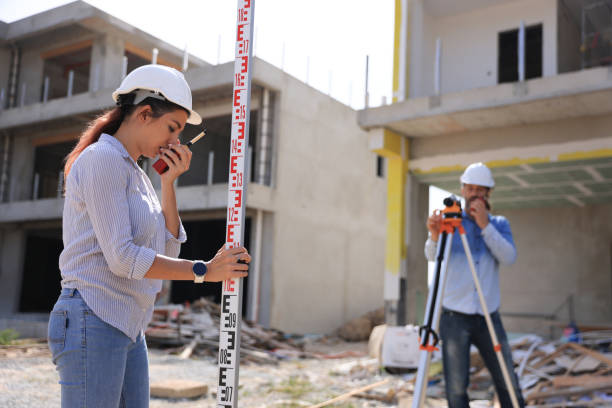
Old fences can feel permanent, especially after they have stood in the same place for decades. Their age, however, does not prove that they were built on the legal boundary. During a property line survey, professionals compare records, monuments, measurements, and field evidence to determine whether the fence follows the established line.
The Fence Was Built for Convenience, Not the Legal Boundary
Fences are often placed where construction is easiest rather than exactly on a surveyed line. Builders may move them around trees, rock outcrops, drainage ditches, steep slopes, or landscaping. Farmers set fencing inside their land so equipment can pass along the outside or repairs can be made without stepping onto a neighbor’s property. Homeowners searching for a property surveyor near me may discover that a fence was intentionally offset by several feet. That gap does not automatically mean land changed ownership; it may reflect how the fence was originally used.
Older Fence Posts May Have Shifted Over Time
Wooden posts can lean as soil softens, roots grow, and repeated wet-dry cycles loosen the ground. Metal posts may bend after falling trees, vehicle contact, livestock pressure, or landscaping work. Erosion on sloped property can also move soil around a fence line while the underlying survey monuments stay in place.
Storm damage creates a problem because repairs may follow the damaged fence instead of the original alignment. Crews replacing sections often match whatever remains standing, even if earlier posts had moved. Anyone looking for a land surveyor near me should expect the surveyor to treat the fence as field evidence, not as a guaranteed corner reference.
Previous Owners May Have Guessed at the Property Line
Past owners sometimes install fences using tax maps, mowing patterns, old stakes, or verbal directions from a neighbor. Those references can be clues, but they are not substitutes for boundary research and precise field measurements. Even a fence built from an assumed line may look straight and reasonable while sitting several feet from the recorded boundary. People comparing survey companies near me can ask whether existing fences and other occupation features will be located during the survey so any difference becomes visible on the final drawing.
Fence Corners Can Ignore Recorded Bearings and Distances
Property lines may follow bearings that do not line up neatly with houses, streets, or rectangular yards. Fence installers often square corners to buildings or follow the easiest path between posts, creating angles that differ from the deed. Short jogs in a legal description can also disappear when someone builds one continuous fence across the area.
Curved road frontage causes confusion because a fence may use several straight sections to approximate a recorded curve. Surveyors compare those physical segments with bearings, distances, curve data, and known monuments during a property line survey. Owners searching for surveyors near me may find that a small difference near one corner becomes much larger farther down a long property line.
Replacement Fences May Not Follow the Original Alignment
New fencing is sometimes installed beside an old fence so the property remains enclosed during construction. Contractors may place posts inches or feet away to avoid concrete footings, buried wire, tree roots, or damaged material. Over several replacement cycles, small shifts can create a line that no longer resembles the first fence location. Families may remember that a fence has “always been there” without realizing its alignment changed during past repairs. Instead, a land surveyor looks beyond the materials and checks older evidence before deciding how much weight the fence should carry.
Deed Measurements Can Place the Boundary Beyond the Fence
Legal descriptions may show that the true line falls outside or inside the occupied yard. Bearings, distances, monument calls, subdivision dimensions, and adjoining deeds can place the boundary somewhere different from the maintained edge. Modern measurements can also reveal that an older fence was built short of a corner because the installer never located the actual monument.
Record research matters most where the fence creates a narrow strip that neither neighbor appears to use. Experienced surveyors near me may examine older deeds, plats, road records, and previous surveys to understand why that strip exists. Boundary ownership questions involving long-term occupation can carry legal issues beyond the survey itself, so the surveyor documents the relationship without deciding a separate ownership claim.
Survey Monuments May Conflict With Longstanding Fence Lines
Iron rods, pipes, stones, concrete markers, and other monuments may show a boundary that does not follow the visible fence. Professionals do not automatically accept either piece of evidence without checking its origin, condition, and relationship to surrounding records. Moved pins can be misleading, while an original monument supported by adjoining surveys and deed calls may carry far more weight than a later fence. Reliable boundary work depends on comparing all available evidence rather than choosing the feature that looks oldest.
The Land Consultants provides land surveying and civil engineering services in the Huntsville area and can review deeds, monuments, adjoining records, and occupation lines to show how an old fence relates to the surveyed property boundary.
