
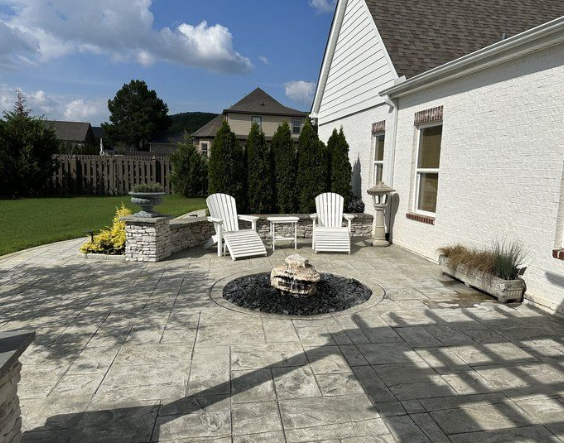
Surface damage often begins as a few flakes, shallow pits, or rough patches that seem harmless at first. Left untreated, those defects can expose aggregate, admit more water, and weaken larger sections of a driveway, patio, or walkway. Experienced concrete contractors identify the source before recommending repairs because covering the surface alone may not stop the damage from returning.
Repeated Freeze-thaw Cycles Expanding Trapped Water Inside the Slab
Water can enter concrete through pores, hairline cracks, unsealed joints, and worn surfaces. Freezing temperatures cause that trapped moisture to expand, placing pressure on the surrounding cement paste. Repeated cycles gradually loosen the top layer until thin scales break away or deeper pieces begin to spall.
Air-entrained concrete handles this pressure better because tiny internal air pockets give expanding water somewhere to move. Qualified concrete contractors in Huntsville AL also inspect drainage and sealing conditions, since standing water increases saturation before cold weather arrives. Early attention may prevent minor flaking from becoming a larger concrete repair near me project.
Applying Harsh Chemical Deicers and Salts During Huntsville Winters
Deicing chemicals can speed up surface deterioration by increasing the number of freeze-thaw cycles within wet concrete. Salt attracts moisture and lowers its freezing point, allowing the slab to remain saturated longer during changing temperatures. Certain products can also react with cement compounds and weaken the surface over time. Safer winter care includes removing snow promptly, using sand for traction, and limiting chemical use on newer slabs. Homeowners comparing cement contractors near me should ask which sealers and maintenance practices suit local conditions. Concrete less than a year old can be especially sensitive because it may not have reached full maturity before winter exposure.
Excess Water Mixed into the Concrete During Pouring, Weakening the Face
Extra water makes fresh concrete easier to spread, but it reduces strength after evaporation leaves small voids behind. A high water-to-cement ratio creates a more porous surface that absorbs moisture and wears faster under tires, foot traffic, and weather. Reliable cement contractors control workability through proper mix design rather than adding unnecessary water at the site.
Several problems can follow an overly wet mixture:
- Surface paste becomes weak and dusty.
- Aggregate bonds less firmly to the cement.
- Shrinkage increases as excess moisture escapes.
- Sealers and coatings may not adhere evenly.
- Freeze-thaw damage develops more easily.
Professional concrete companies in Huntsville AL coordinate delivery, placement, and crew size so the mix can be finished without dilution. That planning protects both the slab’s appearance and its long-term durability.
Finishing the Surface Too Early While Bleed Water Is Still Rising
Bleed water naturally moves upward after fresh concrete enters the forms. Troweling before that moisture evaporates traps water just beneath the surface and folds it back into the cement paste. The resulting top layer may look smooth at first but later separate, blister, scale, or crumble.
Patient finishing allows the slab to release moisture before tools close the surface. Skilled concrete contractors near me watch sheen, firmness, weather, and foot pressure instead of following a fixed clock. Windy or hot conditions may change the timing, which makes field judgment especially important.
Clay Soils Shifting Underneath, Creating Uneven Stress and Pressure
Clay expands as it absorbs water and shrinks as it dries, causing the ground beneath concrete to move unevenly. One section may rise while another loses support, producing cracks, lifted edges, and internal stress. Once those openings form, moisture can reach deeper layers and accelerate spalling around the damaged areas.
Proper excavation, gravel installation, compaction, and drainage reduce the effect of active soil. Experienced cement contractors in Huntsville AL may also recommend geotextile fabric or deeper base preparation where clay remains soft. Searching for concrete companies near me should include asking how each contractor plans to manage the ground, not just the visible slab.
Lack of Proper Curing, Which Leaves the Top Layer Soft and Brittle
Concrete needs retained moisture to develop a dense, strong cement structure. Rapid drying interrupts that process and leaves the exposed face softer than the material below. Direct sunlight, wind, low humidity, and high temperatures can pull moisture from a slab soon after finishing.
Curing compounds, wet coverings, light misting, or plastic sheeting help slow evaporation during early strength development. Reputable concrete contractors understand that curing is part of the installation rather than an optional final step. Poorly cured surfaces may dust, scratch, absorb stains, and break down long before the slab should need repair.
Rusting Steel Rebar Inside the Slab Expanding and Forcing Concrete out
Steel reinforcement can corrode after water, oxygen, and salts reach it through cracks or insufficient concrete cover. Rust occupies more space than the original metal, creating outward pressure that fractures the concrete surrounding the bar. Telltale signs include long cracks, reddish stains, hollow-sounding areas, and chunks breaking away in lines above the reinforcement.
Legacy Outdoor Services evaluates surface deterioration, cracks, water flow, soil movement, and signs of rusting reinforcement before recommending a repair plan. With experience in concrete work, hardscaping, and landscaping, the company can address both the damaged slab and the underlying conditions through patching, resurfacing, drainage improvements, or full replacement.
